
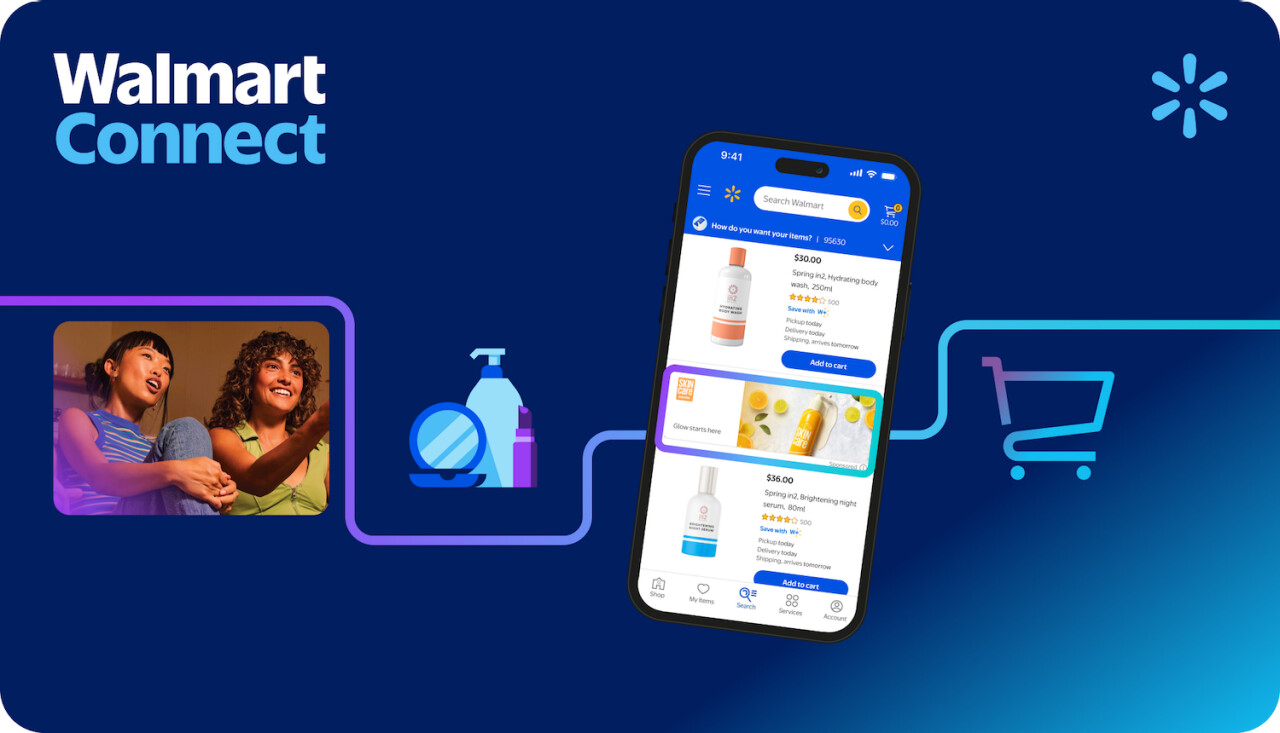
Retail media turned into the fastest-growing, highest-margin line in Amazon's and Walmart's businesses by selling brands a very specific promise: a shopper is standing in front of your product right now, and you can pay to be the one they notice. This week, a Reuters analysis asked the obvious follow-up question: what happens to that promise once the shopper isn't the one doing the noticing? The answer, by the numbers Reuters pulled together, is that the two companies collecting nearly nine of every ten retail media dollars in the U.S. are the ones with the most to lose.
The Math Behind the Headline
eMarketer puts U.S. retail media spend at $74.4 billion this year, up 22.6% from $60.7 billion in 2025, and Amazon and Walmart between them hold roughly 88% of it. That concentration is exactly what makes Morgan Stanley's July estimate land hard: the bank's researchers think AI shopping agents could account for 10% to 20% of U.S. e-commerce spending by 2030. Retail media has always been sold on the assumption that the retailer's own storefront is where the shopping happens. An agent that compares prices, filters options, and checks out somewhere else on a shopper's behalf quietly breaks that assumption, and Amazon's own numbers already show the first crack: its advertising revenue grew 11% year-over-year in the third quarter, the slowest pace in nearly four years, even though ads still reliably make up about 10% of the company's total net sales.
Two Retailers, Two Defenses
Amazon and Walmart are responding to the same threat in opposite ways, which tracks with the split this publication covered in late October. Amazon banned Meta's Muse from its site in September, saying the agent accessed the store without authorization and captured and stored customer credentials (Meta declined to comment), and is separately still fighting to keep Perplexity's Comet out after the 9th Circuit overturned its March injunction in August; Amazon says it disagrees with that ruling and the case continues. CEO Andy Jassy told investors last week that third-party agents haven't meaningfully dented Amazon's ad business yet, and Amazon's public line is that outside agents should operate openly and respect a retailer's decisions about who gets to participate. Its hedge either way is to keep shoppers inside its own agent: Alexa for Shopping already carries embedded ads.
Walmart is betting the other direction: official partner to Meta's agentic tooling, and as of October 21, running its own agent infrastructure that gives outside agents a profile tied to the shopper's account, with purchases subject to a spending limit or explicit approval. But Walmart is hedging its ad revenue the same way Amazon is: CFO John David Rainey told analysts in August that advertising (Walmart Connect included), membership, and marketplace operations drove 45% of the quarter's operating income growth, and the company is now testing ads inside Sparky, its own AI shopping assistant. Walmart doesn't break out Walmart Connect's results on its own, so there's no clean number yet on how much of that growth an agent-mediated world would put at risk.
All retailers need to be thinking about how to interact with consumers in new ways.
Katherine Black, senior consultant, Kearney
What This Means for CPG Brands
Procter & Gamble, Nestlé, and L'Oréal are already reworking how their product listings read, not for shoppers, but for the agents scanning them, a structural shift that matters more than any single ad placement, since practitioners expect bot-facing ads to lean on precise, matchable product data rather than the visual and emotional cues that sell a human. Mondelez's VP of global digital commerce, Andrew Lederman, said back in April that agents are bringing brands closer to consumers, but was careful to add that retailer media sites still drive the vast majority of Mondelez's volume, a reminder that this week's analysis is about where the risk is concentrated, not proof that the model has already broken. Flywheel's chief client officer, Amie Owen, put it plainly: brands shouldn't shift retail media budgets overnight, but should prepare for how discovery and purchase decisions evolve. Kearney's Katherine Black goes further, describing a near future where retail media becomes a bidding system: agents searching at a consumer's price point while retailers set the ceiling and floor underneath them. And Footprints AI's Dan Marc expects the retailers to respond the way incumbents usually do when a channel gets uncertain: by locking their biggest advertisers into multiyear deals and sweetening the discounts to keep them from looking elsewhere too soon.
The Bottom Line
The most telling detail in this week's reporting isn't the 88% concentration number or even Morgan Stanley's 2030 estimate: it's that Amazon and Walmart are hedging against the same threat they're each publicly describing as manageable. Morningstar's Brett Husslein called this "an evolution rather than an existential threat," and the retailers' own earnings calls mostly back that up: nobody's ad business fell off a cliff this quarter. But a company doesn't build ads into its own chatbot, lock in multiyear advertiser deals, and fight a court case over a rival's shopping agent if it genuinely believes nothing is at stake. For CPG brands, the practical read is to do both things Reuters' sources suggested at once: keep the retail media budget where it's working today, while making sure your product data is agent-legible before "evolution" becomes the word used for whatever comes after this one.
Source: Reuters, "AI shopping agents could threaten Amazon and Walmart's ad business," Nov. 4, 2026, via Devdiscourse.